The urban plot of Besalú in the Late Middle Ages: Evolution and characteristics of a model marked by orography
DOI:
https://doi.org/10.33115/a/26046679/1_1Keywords:
Besalú, Medieval Urbanism, Late Medieval Period, Urban evolutionAbstract
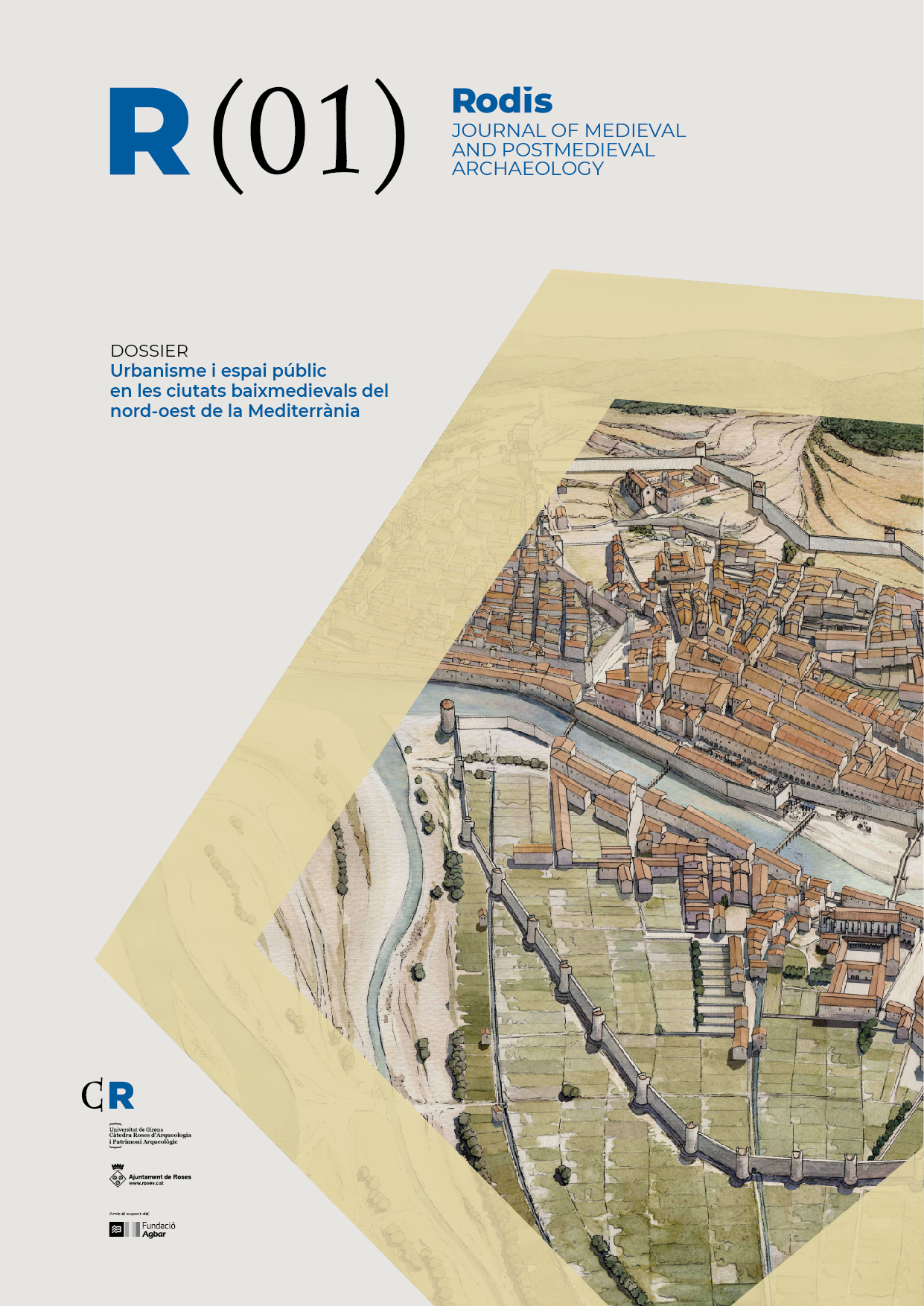
The historical center of Besalú, continuously inhabited since the early Iron Age, is strategically placed at the top of a small hill flanked by the Fluvià river and the Capellada stream, which facilitated its defense. The economic and political zenith of Besalú was achieved during the Carolingian period, when the town became county capital. Such political and economic status was maintained, to a greater or lesser extent, during most of the medieval period and was matched by a continuous urban expansion. As the village grew, urban design had to be adapted to challenging orographic and hydrographic constraints that led to a unique and singular urban structure.
Downloads
Download data is not yet available.
Downloads
Published
2018-10-17
Issue
Section
Dossier
How to Cite
Frigola Torrent, J. (2018). The urban plot of Besalú in the Late Middle Ages: Evolution and characteristics of a model marked by orography. Rodis. Journal of Medieval and Post-Medieval Archaeology, 1, 13. https://doi.org/10.33115/a/26046679/1_1